
“In The Architects Province”:
Julia Morgan, California’s First Female Architect, 1904-1951
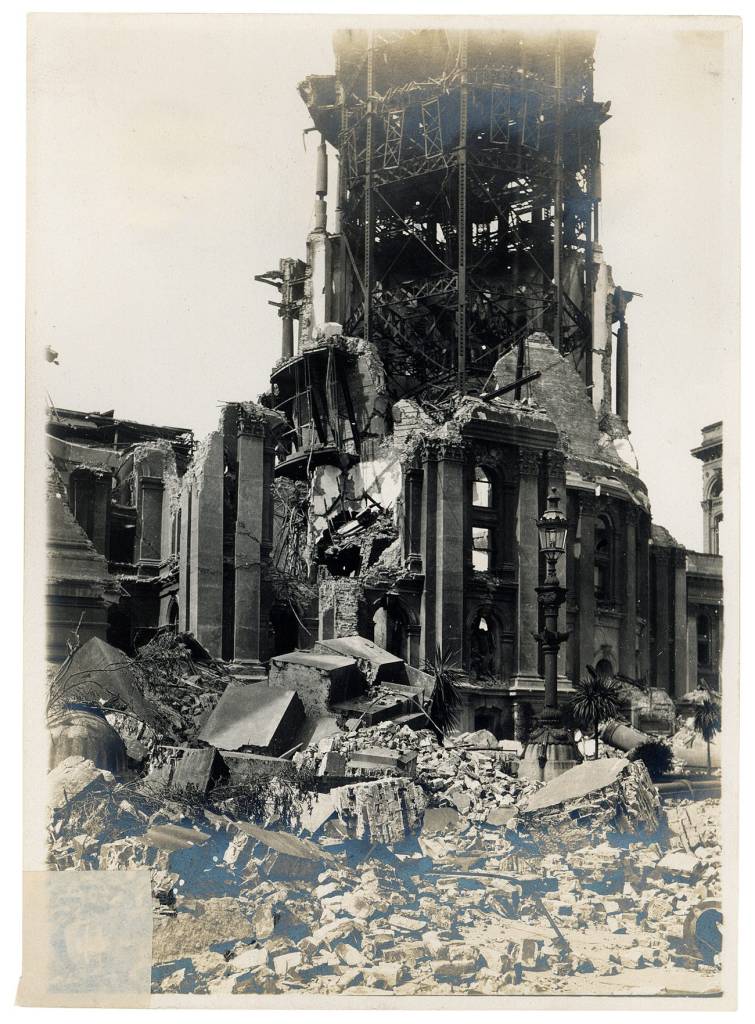
In the early hours of April 18, 1906, a massive earthquake hit the San Francisco Bay Area. Measuring 8.3 on the Richter Scale, the earthquake shook buildings causing almost irreparable damage. More significantly, the jolting busted water and gas lines, causing small fires that erupted into larger blazes that overtook more than four square miles, almost half of the city. Fire alone caused 80 to 90 percent of the total destruction inflicted by the disaster. Prior to the earthquake, San Francisco thrived economically and it continued to do so even after the widespread damage to the Bay Area. While the nation faced economic recession in 1907, San Francisco had enough capital to rebuild. Architects, like Julia Morgan, were relied upon for their expertise in earthquake and fire proof buildings and contractors and building manufacturers worked tirelessly to meet the demand, which, in turn, spurred economic growth.
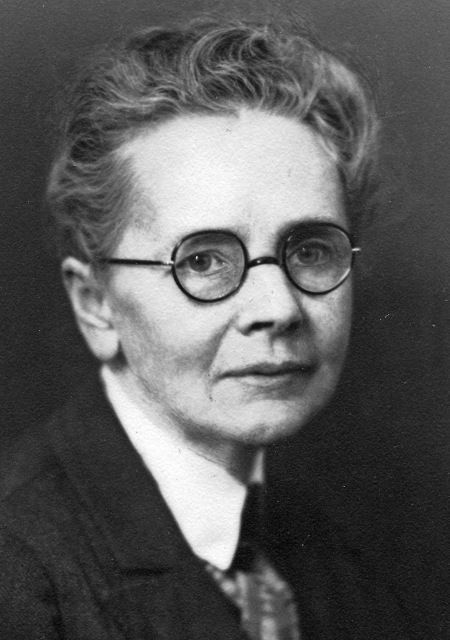
Julia Morgan was born in San Francisco in 1872 into a typical upper-middle class family that adhered to gender norms. However, her mom was forced to take leadership of the family after her father proved to be a weak man who was incapable of maintaining financial security. Morgan learned that men could not always be relied upon financially or emotionally. Morgan was also very intelligent which led her to enroll at the University of California, Berkeley for civil engineering. She was often the only female student in the mathematics and science courses required for her major. In 1894, Morgan graduated with honors and, due to her interest in architecture, was encouraged by her mentor and professor to further her education in Paris at the École des Beaux-Arts. In 1902, after three years in Paris, Morgan returned to Oakland as the first woman to earn a degree in Architecture.
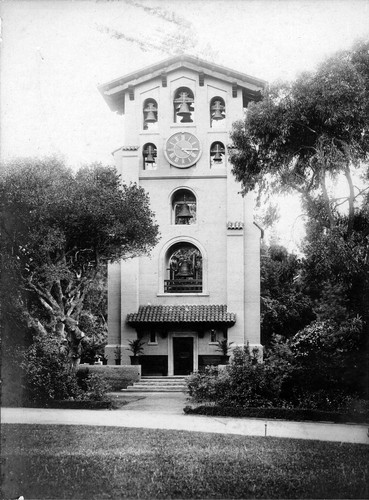
Morgan secured a position with John Galen Howard’s firm, another Beaux-Arts architect. She worked on various projects for William Randolph Hearst, like the Greek Theater at UC Berkeley. Howard assigned Morgan to be the supervising architect of the Greek Theater because of her expertise in reinforced-concrete construction. In 1904 Morgan became the first woman in the state of California to earn her architect license. She opened her own architecture firm and shortly after was hired by Mills College in Oakland to design El Campanil, the college’s bell tower, which she designed using reinforced concrete construction. The training Morgan received at École equipped her with extensive knowledge of and experience with reinforced-concrete construction, making her one of few architects in the city with this expertise. The seventy-two foot tall El Campanil tower at Mills College remarkably survived the 1906 earthquake, which brought acclamation and new commissions to Morgan’s firm.
Morgan’s business practices also contributed to her success. She knew how to network. While mostly shying away from the press, she frequently attended exhibits and openings, maintaining a public face. She circulated among influential people, like the Hearst family, who commissioned Morgan to design and supervise the construction of multiple buildings on their estate and community projects. Furthermore, three years after she opened her private practice, Morgan moved her office to the Merchants Exchange Building, the heart of the financial district in San Francisco. This location was significant to Morgan’s image as an authoritative and serious architectural engineer. In addition, her office reflected her serious professionalism. It contained four rooms: a front office for her secretary, a library for consulting and planning, a drafting room where all her employees worked, and her office, located in the back. She hired both men and women, on merit, apprentices and licensed architects alike. She ran her firm as she would her home, encouraging comradery over competition, but maintained an authoritarian management style.
In addition to the location and character of her firm, Morgan dressed as a professional, always in black simple attire. In 1907, Jane Armstong, a journalist for The Call, a San Francisco newspaper, described Morgan as “Quakerish . . . dressed in drab and severely hair pinned.” Others described Morgan’s self-contradictory character: “she was a tiny, fragile-looking woman, but she could swing a sledge hammer with the strength of a hefty man . . . she spoke softly, but when she issued orders it was with the finality of a Marine drill sergeant.” Her contemporaries expected to see female frills and decorative aspects of design in her work. Morgan’s appearance and professionalism functioned to show the public she was a serious architect. When Armstong asked Morgan about a mural decoration in the Fairmont Hotel during their interview, Morgan replied, “from the first conception of the building the mural decoration has not been in the architect’s province. . . my work has all been structural.” Her serious and quakerish image is necessary to help her clients and the public see past her gender and to her capabilities in an all-male profession.
While the San Francisco earthquake resulted in the destruction of Bay Area communities, with damages estimated between $350 million to $500 million, it jump-started Morgan’s career because she was one of the few who were trained in reinforced-concrete construction. San Francisco Bay Area communities and civic centers were constructed largely with wood, a plentiful and inexpensive material compared with brick due to the regions lumber trade. After the disaster, new earthquake and fire proof construction technology and designs were in high demand. The Bay Area received not only relief money, but also insurance pay outs to help with the cost of rebuilding. The biggest holder of San Francisco insurance policies were American firms but British, German, and French firms held policies as well. In 1905, almost forty percent of San Francisco businesses carried fire insurance through foreign firms, mostly British. Due to this, the San Francisco earthquake and subsequent fires were felt internationally. For instance, in London, the share prices for leading insurance companies fell and the New York and London stock exchange dropped. Some economic historians contribute the San Francisco earthquake to the cause of the Panic of 1907. Massive gold exports from New York and Europe to San Francisco in addition to New York importing gold from its bank reserves in Europe, resulting in defensive actions by the bank of England and subsequent reactions that led to the economic panic of 1907. Morgan, and the San Francisco building industry at large, used the massive funds from relief and insurance to rebuild using the newest innovations and technology, reflecting the part of the city that thrived post-earthquake.
Despite her expertise in reinforced-concrete construction, throughout her career Morgan used various types of materials in her designs, including the redwood unique to Northern California. She was known for working well with clients and incorporating their styles into her designs. In 1951 Morgan retired, leaving a legacy of a successful career that spanned almost fifty years. Morgan’s work comprises over 700 buildings, including schools, libraries, churches, hotels, community centers, commercial buildings, and private homes. The sheer output and quality of her work proves she adhered to a solid business model for a female pioneer in the architectural profession.
Primary Sources:
Armstrong, Jane. “The Young Woman Architect Who Helped Build the Big Fairmont Hotel.” The San Francisco Call. (June 16, 1907) p. 12.
“Contracts for Big Buildings: $3,000,000 worth of reinforced concrete structures provided for by San Francisco.” Oakland Tribune. (June 22, 1906) p. 6.
Secondary Sources:
McNeill, Karen. “Julia Morgan: Gender, Architecture, and Professional Style.” Pacific Historical Review vol.76 no.2 (2007) 229-268.
Odell, Kerry A., Marc D. Weidenmier. “Real Shock, Monetary Aftershock: The 1906 San Francisco Earthquake and the Panic of 1907.” Journal of Economic History vol. 64 no. 4 (2004) 1002-1027.
Riechers, Maggie. “Beyond San Simeon: Architect Julia Morgan.” Humanities 00187526 vol 27 no. 5 (2006) 26.
 Northern California History
Leave a comment