-
Research Prospectus
On January 15, 1913, citizens of San Francisco crowded into the gymnasium of St. Paul’s Presbyterian Church in the city’s Oceanside district. Multiple female organizations, including the Susan B Anthony Club and the San Francisco Women’s Civic League, gathered in the brown shingled building in support of the Oceanside Women’s Club’s campaign to remove Police Judge Charles Weller from the bench. Their charge was Judge Weller’s continued mishandling of sexual assault cases resulting in little to no prison time for the accused.[1] “What we propose to do is to go after every police magistrate found lacking,” announced the Vice President of the Oceanside Women’s Club, Mrs. W.H. Campbell, “and to supplant them on the bench with men who know that issues involving the protection of girls and the safeguarding of the homes are issues that cannot down.”[2]
Until recently, the history of female antirape activism was largely thought to have begun during the 1970s with the Women’s Rights Movement. In her recent book, historian Catherine Jacquet states that since its inception, women’s history on antirape activism has remained focused on their work in the 1970s and the decades that followed. “The commonly told history of twentieth-century organizing against rape begins with 1970s feminism,” she explains, “giving the impression that white feminists had brought sexual violence out of hiding and, in effect, discovered rape as a major social problem.”[3] Although the history is not well documented, women had advocated, at times very loudly and very successfully, for rape law reform prior to the Women’s Rights Movement. Jacquet explains the reasons scholars credited the Women’s Rights Movement with uncovering this “shameful secret.” First, she asserts, women’s history as a field of study was in its infancy during the Women’s Rights Movement and, therefore, there was little coverage on sexual violence and women’s activism at the time. Second, during the civil rights era, feminists were the only group advocating for the rights of rape victims. The efforts were local; there was no national movement and so feminists believed their work was ground-breaking. While the 1970s Women’s Rights Movement did forge important new laws and rights for victims of rape, women’s activism for rape law reform in California existed transpired much earlier.
Empowered by the passage of the Women’s Suffrage Bill in 1911, San Francisco’s clubwomen advocated for the protection of women and girls from sexual violence. San Francisco’s conservative base and liquor trust successfully fought against the suffrage bill in the city, but urban women campaigned in the rural farming areas, which made up a bulk of the state, turning the vote in favor of female suffrage.[4] Despite San Francisco’s general lack of support for female suffrage, the women of the city mobilized quickly to flex their political muscle and to take up rape as one of their primary concerns. To accomplish their goal, female advocates began with the removal of Judge Weller, who showed a pattern of leniency towards men accused of rape. The recall campaign against Judge Weller evidences early twentieth century women’s activism to ensure the state’s rape laws, and the justice system as a whole, would keep sexual predators off the streets. Who were the fierce women behind Judge Weller’s campaign, who boldly fought against the city’s sitting judges and their allies? Was the 1913 campaign against Judge Weller the first organized effort for rape law reform in California? Prior to the 1950s, how often did women in California make efforts to organize for antirape measures and how did those legal reforms take shape? Finally, to what degree did early female activism influence antirape activism of the 1970s?
Legal and women’s historical scholarship will provide the foundation for this research project. It will require analysis of California penal codes and policies regarding sexual assault and rape, as well as an examination of old police sexual assault crime reports, subsequent trial records, and newspaper coverage of such events. For example, feminists in the 1970s were largely concerned with victims’ rights and rape shield laws, eventually enacted in 1985 under section 1103 of the California Evidence Code, which protected victims from further trauma and scrutiny during the trial process. However, victims’ rights were not a new concern in the 1970s, as newspaper evidence reveals women decades prior were troubled by how courts scrutinized the character of rape victims as a method of determining degree of resistance and consent. Further research of appellate and county court decisions, jury trials, crime statistics, crime reports, newspapers, speeches, correspondence, and club meeting minutes will be needed.
Historical research on women’s agency and rape laws is relevant to California’s current political climate and to the education of the state’s voters. Earlier this year, Senator Anna Caballero introduced Senate Bill 1386 to strengthen California’s historic Rape Shield Law, a bill currently in congressional review.[5] The bill is supported by numerous organizations, including California Woman’s Law Center and the America Association of University of Women, California. Sexual Assault and rape laws remain a crucial part of women’s rights advocacy and knowing the history of the legislation around those crimes enables California, and the nation as a whole, to cultivate balanced and just laws.
[1] “Women Launch the Weller Recall in Tempest Anger: Girl’s Dramatic Accusation at Great Mass Meeting Crushes Judge’s Defense,” San Francisco Examiner, January 15, 1913.
[2] Ibid.
[3] Catherine O. Jacquet, The Injustice of Rape: How Activists Responded to Sexual Violence, 1950-1980 (Chapel Hill: University of North Carolina Press, 2019) 9.
[4] Gertrude Atherton, California: An Intimate History (New York: Harper & Brothers Publishers, 1914) 327.
[5] Senator Anna Caballero, “New Press Release,” Democratic Caucus, California State Senate. https://sd14.senate.ca.gov/news/press-release/sb-1386-strengthens-californias-historic-rape-shield-law-and-heightens-legal
Article by: Raquel Biesecker
-
“In The Architects Province”:
Julia Morgan, California’s First Female Architect, 1904-1951
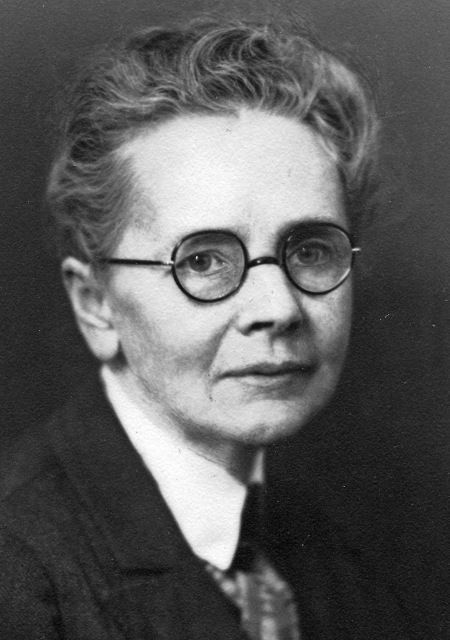
Julia Morgan (courtesy of californiamuseum.org) In the early hours of April 18, 1906, a massive earthquake hit the San Francisco Bay Area. Measuring 8.3 on the Richter Scale, the earthquake shook buildings causing almost irreparable damage. More significantly, the jolting busted water and gas lines, causing small fires that erupted into larger blazes that overtook more than four square miles, almost half of the city. Fire alone caused 80 to 90 percent of the total destruction inflicted by the disaster. Prior to the earthquake, San Francisco thrived economically and it continued to do so even after the widespread damage to the Bay Area. While the nation faced economic recession in 1907, San Francisco had enough capital to rebuild. Architects, like Julia Morgan, were relied upon for their expertise in earthquake and fire proof buildings and contractors and building manufacturers worked tirelessly to meet the demand, which, in turn, spurred economic growth.
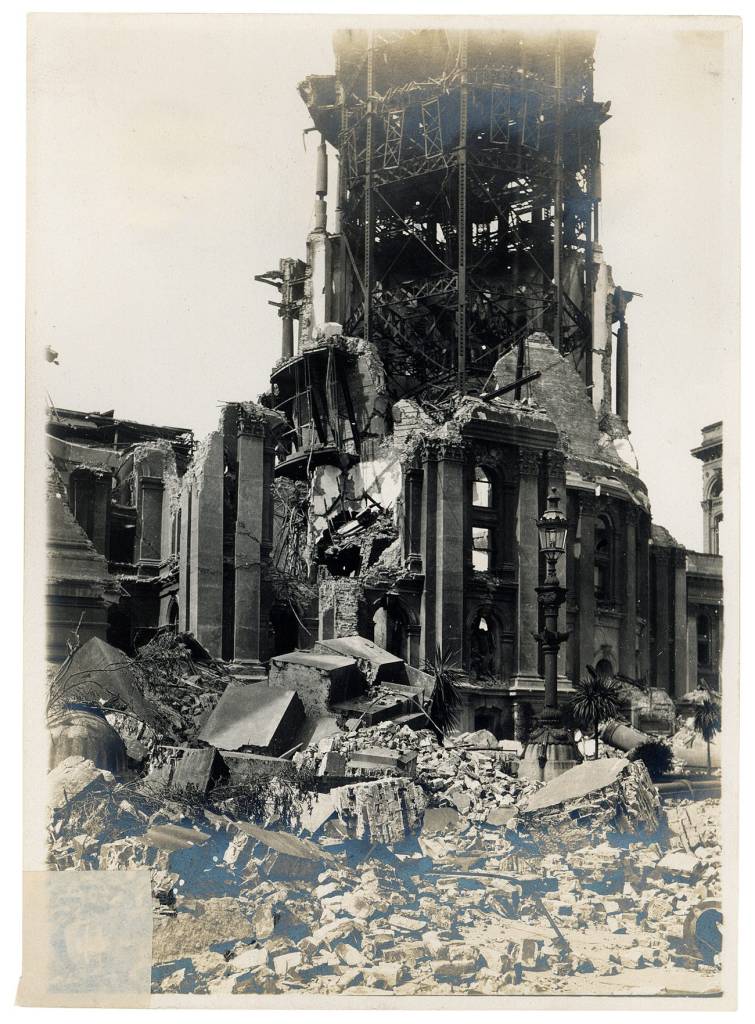
San Francisco’s city hall after the 1906 earthquake (courtesy Business Insider) Julia Morgan was born in San Francisco in 1872 into a typical upper-middle class family that adhered to gender norms. However, her mom was forced to take leadership of the family after her father proved to be a weak man who was incapable of maintaining financial security. Morgan learned that men could not always be relied upon financially or emotionally. Morgan was also very intelligent which led her to enroll at the University of California, Berkeley for civil engineering. She was often the only female student in the mathematics and science courses required for her major. In 1894, Morgan graduated with honors and, due to her interest in architecture, was encouraged by her mentor and professor to further her education in Paris at the École des Beaux-Arts. In 1902, after three years in Paris, Morgan returned to Oakland as the first woman to earn a degree in Architecture.
Morgan secured a position with John Galen Howard’s firm, another Beaux-Arts architect. She worked on various projects for William Randolph Hearst, like the Greek Theater at UC Berkeley. Howard assigned Morgan to be the supervising architect of the Greek Theater because of her expertise in reinforced-concrete construction. In 1904 Morgan became the first woman in the state of California to earn her architect license. She opened her own architecture firm and shortly after was hired by Mills College in Oakland to design El Campanil, the college’s bell tower, which she designed using reinforced concrete construction. The training Morgan received at École equipped her with extensive knowledge of and experience with reinforced-concrete construction, making her one of few architects in the city with this expertise. The seventy-two foot tall El Campanil tower at Mills College remarkably survived the 1906 earthquake, which brought acclamation and new commissions to Morgan’s firm.
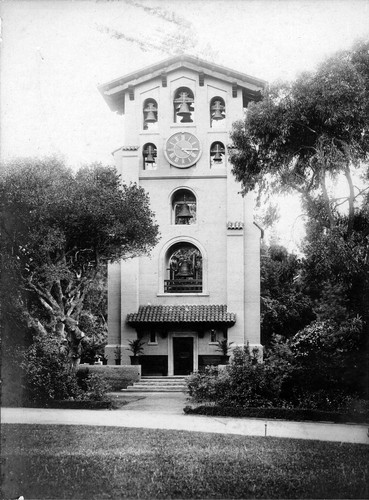
El Campanil at Mills College, 1905 (courtesy Mills College) Morgan’s business practices also contributed to her success. She knew how to network. While mostly shying away from the press, she frequently attended exhibits and openings, maintaining a public face. She circulated among influential people, like the Hearst family, who commissioned Morgan to design and supervise the construction of multiple buildings on their estate and community projects. Furthermore, three years after she opened her private practice, Morgan moved her office to the Merchants Exchange Building, the heart of the financial district in San Francisco. This location was significant to Morgan’s image as an authoritative and serious architectural engineer. In addition, her office reflected her serious professionalism. It contained four rooms: a front office for her secretary, a library for consulting and planning, a drafting room where all her employees worked, and her office, located in the back. She hired both men and women, on merit, apprentices and licensed architects alike. She ran her firm as she would her home, encouraging comradery over competition, but maintained an authoritarian management style.
In addition to the location and character of her firm, Morgan dressed as a professional, always in black simple attire. In 1907, Jane Armstong, a journalist for The Call, a San Francisco newspaper, described Morgan as “Quakerish . . . dressed in drab and severely hair pinned.” Others described Morgan’s self-contradictory character: “she was a tiny, fragile-looking woman, but she could swing a sledge hammer with the strength of a hefty man . . . she spoke softly, but when she issued orders it was with the finality of a Marine drill sergeant.” Her contemporaries expected to see female frills and decorative aspects of design in her work. Morgan’s appearance and professionalism functioned to show the public she was a serious architect. When Armstong asked Morgan about a mural decoration in the Fairmont Hotel during their interview, Morgan replied, “from the first conception of the building the mural decoration has not been in the architect’s province. . . my work has all been structural.” Her serious and quakerish image is necessary to help her clients and the public see past her gender and to her capabilities in an all-male profession.
While the San Francisco earthquake resulted in the destruction of Bay Area communities, with damages estimated between $350 million to $500 million, it jump-started Morgan’s career because she was one of the few who were trained in reinforced-concrete construction. San Francisco Bay Area communities and civic centers were constructed largely with wood, a plentiful and inexpensive material compared with brick due to the regions lumber trade. After the disaster, new earthquake and fire proof construction technology and designs were in high demand. The Bay Area received not only relief money, but also insurance pay outs to help with the cost of rebuilding. The biggest holder of San Francisco insurance policies were American firms but British, German, and French firms held policies as well. In 1905, almost forty percent of San Francisco businesses carried fire insurance through foreign firms, mostly British. Due to this, the San Francisco earthquake and subsequent fires were felt internationally. For instance, in London, the share prices for leading insurance companies fell and the New York and London stock exchange dropped. Some economic historians contribute the San Francisco earthquake to the cause of the Panic of 1907. Massive gold exports from New York and Europe to San Francisco in addition to New York importing gold from its bank reserves in Europe, resulting in defensive actions by the bank of England and subsequent reactions that led to the economic panic of 1907. Morgan, and the San Francisco building industry at large, used the massive funds from relief and insurance to rebuild using the newest innovations and technology, reflecting the part of the city that thrived post-earthquake.
Despite her expertise in reinforced-concrete construction, throughout her career Morgan used various types of materials in her designs, including the redwood unique to Northern California. She was known for working well with clients and incorporating their styles into her designs. In 1951 Morgan retired, leaving a legacy of a successful career that spanned almost fifty years. Morgan’s work comprises over 700 buildings, including schools, libraries, churches, hotels, community centers, commercial buildings, and private homes. The sheer output and quality of her work proves she adhered to a solid business model for a female pioneer in the architectural profession.
Primary Sources:
Armstrong, Jane. “The Young Woman Architect Who Helped Build the Big Fairmont Hotel.” The San Francisco Call. (June 16, 1907) p. 12.
“Contracts for Big Buildings: $3,000,000 worth of reinforced concrete structures provided for by San Francisco.” Oakland Tribune. (June 22, 1906) p. 6.
Secondary Sources:
McNeill, Karen. “Julia Morgan: Gender, Architecture, and Professional Style.” Pacific Historical Review vol.76 no.2 (2007) 229-268.
Odell, Kerry A., Marc D. Weidenmier. “Real Shock, Monetary Aftershock: The 1906 San Francisco Earthquake and the Panic of 1907.” Journal of Economic History vol. 64 no. 4 (2004) 1002-1027.
Riechers, Maggie. “Beyond San Simeon: Architect Julia Morgan.” Humanities 00187526 vol 27 no. 5 (2006) 26.
Article by: Raquel Biesecker
-
What Happened To Chief Biggy?: corruption, crime, and a cold case in early twentieth century San Francisco
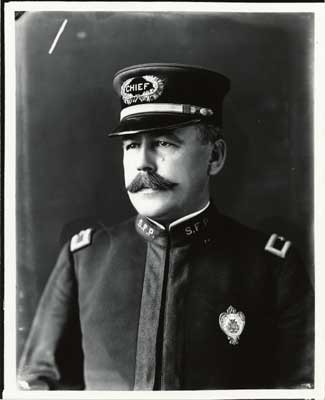
Police Chief William Biggy c. 1907
On the cold foggy night of November 30, 1908, Chief of Police William J. Biggy went missing shortly before midnight from a police patrol boat in the San Francisco Bay. Mostly decomposed and unrecognizable, his body was found floating in the channel between Yerba Buena Island and Lombard Street Warf a few weeks later. The body was identified by family through personal effects and clothing.[1] The sad ending for Chief Biggy is one of many unsolved cold cases in San Francisco’s history. In Biggy’s day, the city was ruled by corrupt city bosses, vice, and greed. The events surrounding the Chief’s death marked a turning point for San Francisco.
Since it was taken over by Americans in 1846 and gold was discovered within its veins, the San Francisco Bay Area was a picture of crime and lawlessness often characterized as the wild west. The population of the region grew rapidly, a rush of men who came to strike it rich. Local government was venal or weak and violent crime so common place that citizens created the Vigilante Committee to try to bring order. Their method included an extemporaneous trial and public hanging aimed to instill fear and prevent violence. For more than 50 years, gambling and prostitution wreaked havoc on the young town.[2] By the beginning of the twentieth century, San Francisco had begun to feel the effects of eastern prohibitionists and puritans.[3] The last powerful city boss, Abe Ruef, founder of the Union Labor Party in 1901, and his corrupt administration, including Mayor Eugene Schmitz, were indicted in 1906 for bribery and extortion. Ruef’s political machine controlled judges, the Board of Supervisors, and the Chief of Police. Yet his endorsement of District Attorney William Langton would be his demise. Langton enforced the city’s vice laws and attacked brothels and gambling dens. Ruef would not go down easy as executions of arresting officers and the attempted assassination of Francis Heney, the federal prosecutor proved.[4] It is in this story that William Biggy lost his life.
In 1907 William Biggy, a devout Catholic and known to be an honest man, was appointed by Mayor Edward Robeson Taylor to replace Chief of Police Jeremiah Dinan, who was forced to resign under charges of perjury. Biggy made himself known as an Officer of the Court during Ruef’s trial as he was tasked with guarding the prisoner in the St Francis Hotel. The jails had been corrupted by Dinan and Ruef was a known charmer who endeared and paid officers to do his bidding. The honest Biggy, however, was trusted to guard him away from sullied city jails. Sadly, in this corrupt climate, even Biggy’s name would be tarnished. While on trial, Morris Haas, Ruef’s bagman, took out a gun and fired on prosecutor Heney, who survived the bold attack. Haas, however, did not. He was later found dead in his cell, shot in the head with a .22 pistol, which oddly was discovered in his shoe. Rumors flew and newspapers charged that Biggy, who had been corrupted while watching Ruef at the St. Francis, was on Ruef’s payroll and ordered Haas killed so he could not talk about the attempt on Heney’s life. Although he adamantly denied the allegations, Biggy wanted to resign until he cleared himself of the unofficial charges. Police Commissioner Hugo Keil, however, convinced Biggy that resigning would be viewed as a confession and so he stayed on. The two continued to discuss the investigation into Haas’ death, until one night when Chief Biggy himself fell victim to the corruption that plagued the city.[5]
On the night of Novemeber 30, 1908, Chief Biggy and Commissioner Keil met at Keil’s home in Belvedere, a residential area of Tiburon across the bay from the city, to talk about the investigation. About 11 o’clock that night, Biggy left Keil’s home, boarded the police patrol boat and headed back across the bay for the city. Police officer and patrol boat driver, William Murphy, was the only other occupant on the boat. The two men chatted awhile during the first leg of the journey until Biggy complained of being cold. Murphy advised him to seek shelter beneath until the boat docked and at that point Murphy went back to manning the wheel. He last saw Biggy leaning against the rail as they passed Alcatraz Island. When the boat docked, Biggy was no longer on board.[6] A search party organized and for three days divers and hikers relentlessly hunted for their Chief of Police with no avail. On December 15th, a few weeks later, Biggy was found floating in the bay. Even though the coroner found no clear marks of foul play, it was hard to swallow that Biggy would have committed suicide. Not only was he a devout Catholic but Keil explained that Biggy left his house in a cheerful mood. In addition, a fully loaded hammerless revolver was found in his pocket. While some doubted the suicide theory, others embraced it, believing that Biggy had been corrupted by Ruef and was unable to face the impending charges against him over Haas’ mysterious death.[7] Two years later however, more began to believe that Biggy had been murdered after Murphy was committed to a mental institution and said to have exclaimed repeatedly, “I don’t know who did it, but I swear to God I didn’t.”[8] Whether guilt, fear or both caused Murphy’s mania, the mysterious death of William Biggy marked the end of city bosses, lawlessness, and corruption going unchecked in San Francisco. While the unexplained death of Chief Biggy remains an open case, the shady sin and corruption that afflicted the city were closed.
[1] “Biggy’s Body Found in Bay,” Sacramento Union, (Sacramento, CA) December 16, 1908
[2] Richard B. Felson, and Patrick R. Cundiff. “The Gold Rush and Afterwards: Homicide in San Francisco, 1849-2003.” Aggressive Behavior 44, no. 6 (2018): 601-613.; Nancy J. Taniguchi, “Weaving a Different World: Women and the California Gold Rush,” California History 79, no. 2 (2000): 141-68.
[3] “Abe Ruef: America’s Most Erudite City Boss,” The Museum of the City of San Francisco, http://www.sfmuseaum.net/hist1/ruef/html
[4] Walton E. Bean, “Boss Ruef, the Union Labor Party, and the Graft Prosecution in San Francisco, 1901-1911.” Pacific Historical Review 17, no. 4 (1948): 443-55
[5] “Unsolved Death of Chief William Biggy,” Museum of the City of San Francisco, http://www.sfmuseum.org/sfpd/sfpd1.html
[6] “San Francisco Chief of Police Drowns in Bay,” Los Angeles Herald, Volume 36, Number 61, 1 December 1908, https://cdnc.ucr.edu
[7] “Unsolved Death,” Museum of the City of San Francisco
[8] “Streets of San Francisco,” San Francisco Chronicle, September 19, 1928, 7.
Article by: Raquel Biesecker

Northern California History
Race and Gender in the Golden State
 Northern California History